Net Worth Tracking for Anxious People
If opening a banking app makes your stomach tighten, you are not broken. Sometimes the first step is not a budget, a spreadsheet, or a big plan. Sometimes it is just one calm number.
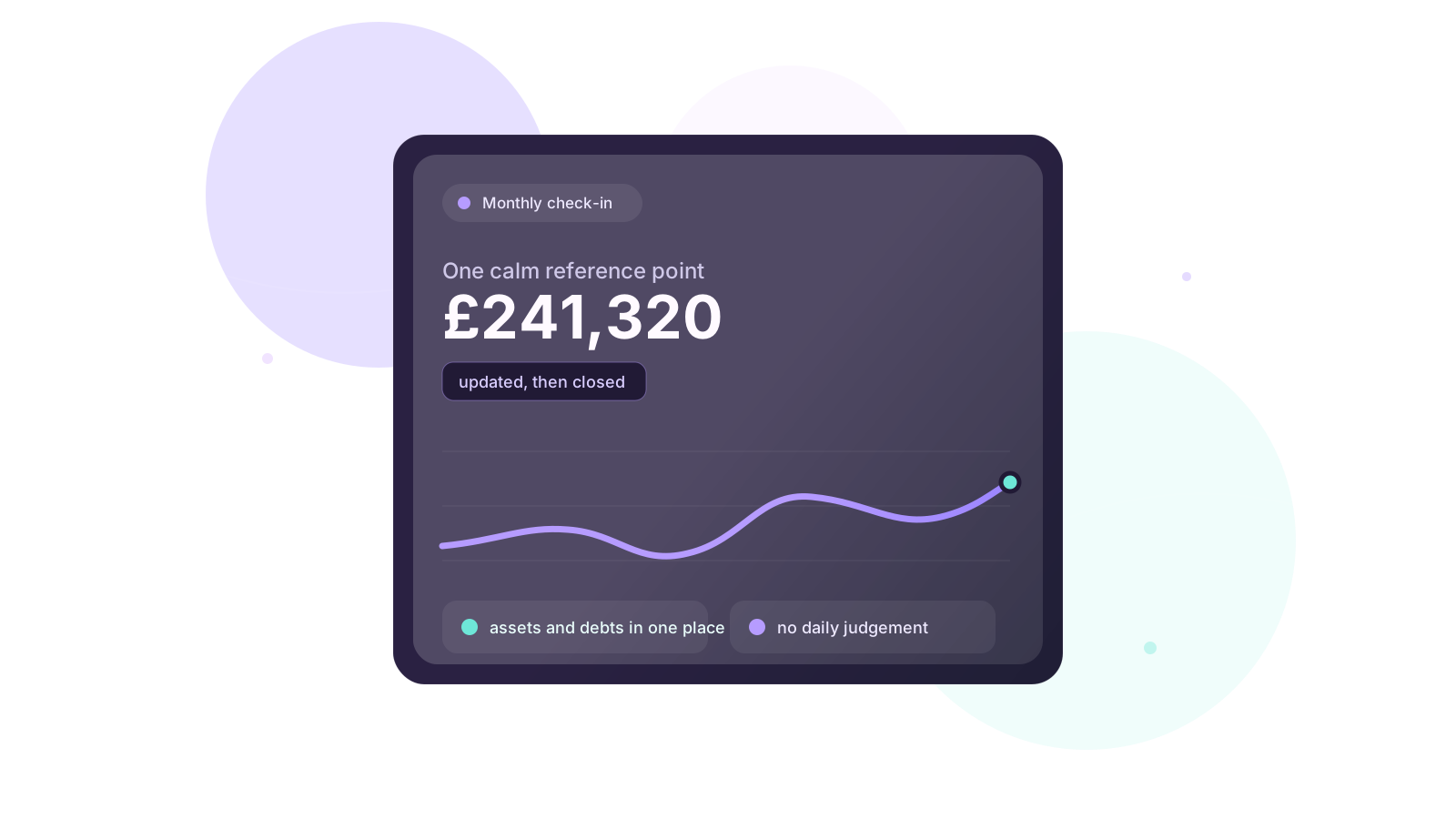
Quick thought
Money anxiety often grows when everything feels vague. A simple net worth tracker gives you one reference point: what you own minus what you owe.
It will not solve every money problem. But it can make the picture less blurry.
Why money can feel so heavy
Personal finance advice often assumes that you are ready to optimise everything. Track every expense. Build a perfect budget. Compare accounts. Move money around. Make better decisions.
That can be useful advice, but it can also feel like too much.
When I feel avoidant about money, the hardest part is not usually the maths. It is opening the app. Looking at the numbers. Wondering if I am behind. Wondering if I should have done something earlier. Wondering if I am the only person who finds this stressful.
This is why I like net worth tracking. It gives me a way to check in without turning my whole life into a finance project.
One number is easier than everything
Net worth is simple:
what you own - what you owe
That is it.
You do not need to categorise every transaction. You do not need to explain why you spent money. You do not need to judge yourself for the month you just had.
You just look at the full picture:
- cash and savings
- investments
- pensions or retirement accounts
- property
- vehicles
- other meaningful assets
- credit cards, loans, mortgage, and other debts
Then you compare the total with last month.
The goal is not perfection
For anxious people, perfection can become another trap. If the system requires perfect data, you may stop using it the moment life gets messy.
So I prefer a softer rule:
accurate enough to see the direction.
If your property estimate is not exact, that is okay. If you update your pension quarterly instead of monthly, that is okay. If you forget one month and come back later, that is okay too.
The point is not to produce a financial report. The point is to reduce uncertainty.
A calmer monthly check-in
Here is a small routine that can help:
- Pick one quiet moment each month.
- Open each account and write down the total balance.
- Update debts as negative values.
- Look at the total net worth.
- Close it and move on.
That last part matters. You are allowed to close it and move on.
You do not have to fix your entire financial life in one sitting.
Try this
Before opening your accounts, decide what "done" means. For example: "I will update the totals and check my net worth." That keeps the check-in small.
Why manual tracking can feel safer
Some people love automatic bank connections. I understand why. But if you already feel uneasy around money, automatic tracking can sometimes create more noise: broken syncs, duplicate transactions, strange categories, or numbers that change before you understand why.
Manual tracking is slower, but it can feel calmer.
You choose when to look. You choose what to update. You type the totals yourself, which creates a small moment of attention without inviting every transaction into the room.
That is the feeling I wanted Worth it to support: a clear view, without pressure.
If the number goes down
Sometimes your net worth will go down. That does not mean you failed.
Markets move. Bills arrive. Cars need repairs. Life costs money. A lower month is not a moral judgement. It is information.
The useful question is not:
Why am I bad with money?
The useful question is:
What changed, and is there one small thing I want to do next?
Sometimes the answer is to adjust something. Sometimes the answer is simply to know.
Start smaller than you think
If money makes you anxious, start with less.
Track only your main accounts first. Or only cash and debts. Or only the accounts you can face today.
You can add more later.
Building the habit matters more than building the perfect setup.
A gentle first step
If you have been avoiding your finances, try this once:
Open one account. Write down one balance. That counts.
Then, when you are ready, add the next one.
Over time, those small check-ins can become a picture. Not a perfect picture, but a clearer one. And sometimes clarity is enough to make money feel a little less frightening.
Worth it
Track your net worth without budgeting
Keep assets and debts in one place, update balances manually, and see how your money changes over time.