How I Track My Net Worth Manually Without Bank Sync
This is how I keep a simple view of what I own, what I owe, and whether things are moving in the right direction, without linking bank accounts or categorising every transaction.
Quick answer
A manual net worth tracker is a simple list of your assets and debts, updated on a regular schedule. Once a month, you record the total value of each account or asset, subtract what you owe, and compare the result with previous months.
It is useful if you want a clear financial overview without budgeting, bank sync, or daily transaction tracking.
Where this started
My own relationship with money started with a lot of avoidance. I knew personal finance mattered, but I did not really know where to begin.
One day, a friend reminded me that a former employer had set up a retirement account for us. I had completely forgotten about it. I almost lost track of real money, not because I was careless, but because I had no simple system for seeing everything I owned in one place.
So I tried the obvious thing: budgeting apps. I connected accounts, looked at categories, checked transactions, and quickly realised that it was not the kind of finance habit I wanted. It felt a little too invasive, and one missing or badly categorised transaction could make the whole thing feel messy.
What finally helped was much simpler: tracking my net worth manually once a month.
If you are comparing this approach with a budgeting system, I also wrote about using a simpler YNAB alternative when you do not want to budget.
Why manual net worth tracking worked for me
Most personal finance apps start with budgets, categories, and transactions. That can be useful, but it can also become tiring. One missing transaction, one weird bank sync, or one incorrect category can make the whole system feel noisy.
Manual net worth tracking takes a different route. Instead of asking "Where did every transaction go?", it asks:
Is my overall financial position improving?
That one question was enough to make me feel more aware. I could see whether savings, investments, pensions, property, vehicles, loans, and credit cards were moving in the right direction. I did not need perfect daily data to understand the bigger picture.
Who this works for
This routine may be a good fit if you:
- want to understand your finances without maintaining a budget
- prefer not to connect bank accounts to a finance app
- care more about monthly progress than daily spending
- have accounts spread across banks, pensions, investments, property, or other assets
- want a private, low-effort way to see your financial life in one place
It also works if your net worth is small or negative. I think this is important. Net worth tracking can sound like something for people who already have a lot of money, but it is really just a way to know where you stand and notice whether things are improving.
What app tracks net worth with manual entry?
If you want to track net worth with manual entry, look for an app that lets you enter the total value of each asset and debt yourself, instead of forcing bank sync or transaction categories.
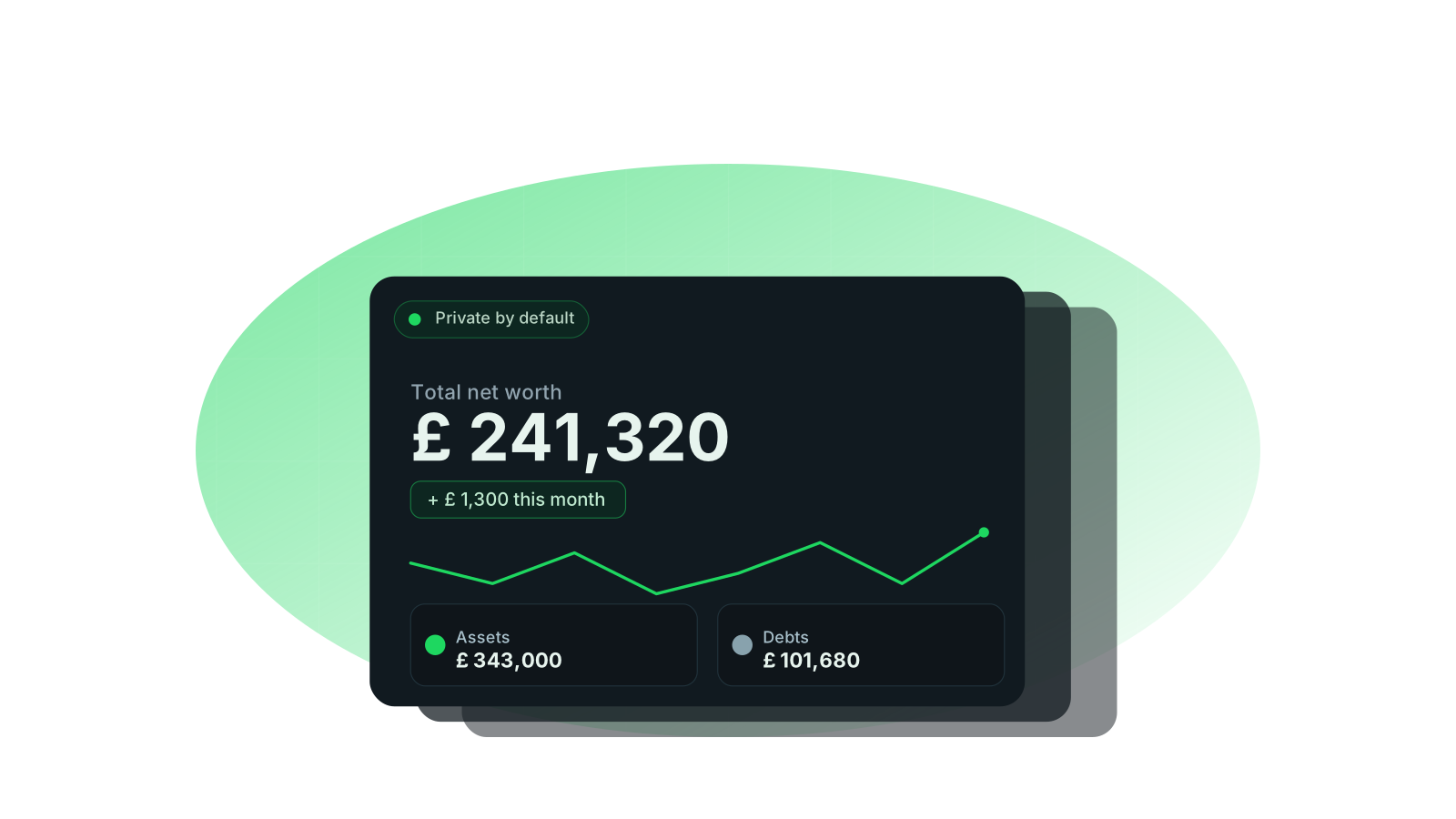
That is the way Worth it works. You add accounts, savings, investments, property, loans, crypto, vehicles, or anything else you want to include. Then you update the total value when it makes sense for you. For many people, that means once a month.
If you are looking for the app version of this routine, see the manual net worth tracker page.
Here is the practical difference:
| Option | Good for | Trade-off |
|---|---|---|
| Spreadsheet | Full control and no app dependency | You build charts, history, currencies, and reminders yourself |
| Bank-sync finance app | Automatic transactions and spending categories | Not everything syncs, and the app may feel noisy if you only want net worth |
| Manual net worth app | Assets, debts, monthly progress, and privacy without budgeting | You still enter or update the numbers yourself |
Manual entry is slower than full automation, but it can be calmer. You decide what belongs in your financial picture, and you are not waiting for a bank connection to behave.
The five-minute monthly routine
Here is the routine I use. I pick one day each month and do the same small check-in:
- Open each account, pension, investment platform, or loan statement.
- Record the current total value for each asset and debt.
- Add the assets together.
- Add the debts together.
- Subtract debts from assets.
- Compare the result with last month.
You can do this in a spreadsheet, a notebook, or an app like Worth it. The important part is consistency. A rough but consistent number is more useful than a perfect number you never update.
Simple rule
Update liquid accounts monthly. Update slower-moving assets like property, vehicles, or collectibles less often, but use a consistent method each time.
What to include in your net worth
I include anything meaningful that I own or owe. You can adapt this to your own situation.
Assets
- current accounts and savings
- investments and ISAs
- pensions and retirement accounts
- property
- vehicles
- business equity
- valuable collectibles, if you would realistically count or sell them
Debts
- mortgage balance
- credit cards
- student loans
- car loans
- personal loans
- buy-now-pay-later balances
Small cash amounts and everyday items usually do not matter to me. I try to keep the system simple enough that I will still want to use it next month.
How to value each account or asset
I try to use the same rule each time so the trend stays meaningful.
- Cash and savings: use the balance on your update day.
- Investments: use the platform total on your update day.
- Pensions: use the latest provider value. Monthly or quarterly is enough for many people.
- Property: use a conservative estimate based on local sales or a valuation tool. Update a few times a year.
- Vehicles: use a realistic resale estimate. Update a few times a year.
- Debts: use the outstanding balance, not the original loan amount.
The goal is not to win an accounting prize. The goal is to create a reliable signal you can live with.
Manual tracking vs bank sync
Bank sync can be convenient. I understand why people like it. But for me, it was not the best fit for net worth tracking.
Manual tracking has a few advantages:
- it keeps your bank credentials out of the app
- it works for assets that banks cannot sync, like property, vehicles, pensions, or collectibles
- it avoids broken connections and duplicate transactions
- it makes the monthly check-in intentional
- it keeps the focus on progress, not noise
The trade-off is that you need to update the numbers yourself. For me, that became part of the benefit. Five calm minutes a month felt easier than maintaining an automated system I did not fully trust.
Spreadsheet or app?
A spreadsheet is a perfectly good manual net worth tracker. If you want to start there, keep it very simple:
- account or asset name
- type
- currency
- current value
- date updated
That is enough to get started. You do not need a beautiful dashboard on day one.
An app becomes useful when you want charts, monthly history, multi-currency support, reminders, exports, and a cleaner overview on your phone. I built Worth it around this exact routine: manually update your accounts, then see your net worth, monthly change, and asset breakdown without turning it into a budgeting chore.
Common questions
Is net worth tracking only for wealthy people?
No. Net worth is simply what you own minus what you owe. It can be positive, zero, or negative. Tracking it is about awareness, not status.
How often should I update my net worth?
Monthly is a good default. It is frequent enough to show progress, but not so frequent that market swings or daily spending become distracting.
Should I include my home?
Yes, if you want a full picture. Use a conservative estimate and subtract the remaining mortgage balance. If property values feel too noisy, track a version with and without your home.
What if I use multiple currencies?
Choose one base currency and convert values on your update day. Consistency matters more than tiny exchange-rate precision.
Can I track net worth without budgeting?
Yes. Budgeting looks at spending behaviour. Net worth tracking looks at the overall result. Some people use both, but you do not need a budget to understand whether your financial position is improving.
What app tracks net worth with manual entry?
Worth it is built for manual net worth tracking. You enter assets and debts yourself, update their values when you want, and see how your net worth changes over time without budgeting or linking bank accounts.
Can I track my net worth by hand?
Yes. You can track your net worth by hand by listing your assets and debts, updating their total values on a regular schedule, and comparing the result with previous months. Worth it gives that manual routine a cleaner home than a spreadsheet.
What is a net worth tracker without bank sync?
A net worth tracker without bank sync lets you record balances yourself instead of connecting bank accounts. This can be useful if you want more privacy, have assets that banks cannot sync, or prefer a simple monthly check-in.
What is the best manual net worth tracker?
The best manual net worth tracker is the one you will keep using. Look for something simple, private, easy to update, and focused on assets and debts rather than daily transaction categories.
Try it next month
If this sounds useful, try it once. Set a reminder for the same day next month. Record each balance, check the total, and write one short note about what changed.
That is enough. No categories, no bank links, no daily admin. Just a simple monthly view of where you stand.
Worth it
Track your net worth without budgeting
Keep assets and debts in one place, update balances manually, and see how your money changes over time.